Spintronics Laboratory · Academia Sinica

Controlling spin to uncover new physics in materials

We study topological materials, spin dynamics, and microscopic magnetic structures at the intersection of fundamental physics, precision experiments, and future information technologies.

Research Focus

From quantum materials to controllable spin

We combine material growth, magnetic measurements, and simulation to understand how spin is generated, transported, and coupled to microscopic structures.

01 · Low-Dimensional Magnetism

Low-dimensional magnetism and van der Waals quantum materials

Explore magnetic order, phase transitions, exciton–spin interactions, and interfacial ferroelectricity in atomically thin materials.

Recent work
Six-state clock order in NiPS₃ and interfacial ferroelectricity in WTe₂
Methods
Low-temperature measurements · electrical and magnetic characterization · data analysis

02 · Interface Physics

Magnetic heterostructures and interface physics

Study magnetic proximity effects, interfacial anisotropy, and charge–spin coupling in magnetic-film and topological-material heterostructures.

Recent work
Interfacial magnetism in Cr₂Ge₂Te₆/(Bi,Sb)₂Te₃/Eu₃Fe₅O₁₂
Methods
Thin-film preparation · magnetotransport · interface-magnetism analysis

03 · Topological Transport

Topological magnetism and magnetotransport

Investigate anomalous Hall effects, Berry curvature, band filling, and thermoelectric transport in topological materials.

Recent work
Band filling, thermoelectric response, and anomalous Hall transport in Co₃Sn₂S₂
Methods
Low-temperature magnetotransport · PPMS · data analysis

04 · Spin Dynamics

Spin transport and magnetization dynamics

Study spin currents, spin pumping, spin-wave propagation, and interactions between spin waves and domain walls.

Continuing work
Bi₂Se₃/YIG magnetization dynamics and domain-wall spin-wave filtering
Methods
Ferromagnetic resonance · micromagnetic simulation · magnetization-dynamics analysis
View research highlights →

Experimental Capabilities

From thin-film growth to low-temperature magnetotransport

We combine thin-film preparation, structural characterization, and physical-property measurements to investigate magnetic materials, thin-film heterostructures, and their electrical transport behavior.

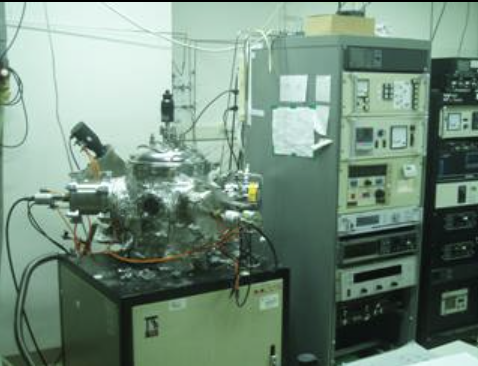
High-vacuum sputtering system with turbomolecular pump in the laboratory

01

High-Vacuum Sputtering System with Turbomolecular Pump

Purpose

Uses plasma sputtering to deposit metal, alloy, and oxide films for nanoscale films and multilayer structures.

Principle

Ions in a plasma strike a target and eject atoms that deposit on a substrate as a thin film; rapidly rotating turbomolecular-pump blades transfer momentum to gas molecules to maintain high vacuum.

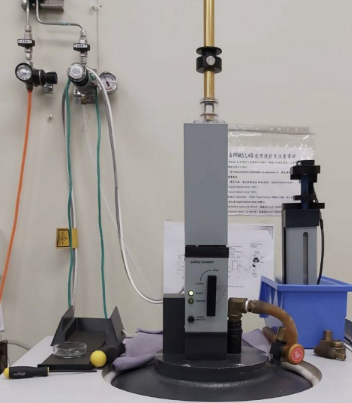
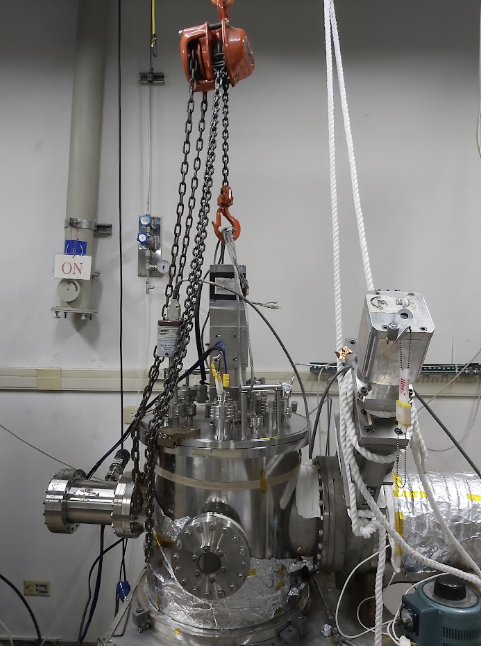
High-vacuum sputtering system with cryopump in the laboratory

02

High-Vacuum Sputtering System with Cryopump

Purpose

Deposits thin films in high vacuum for magnetic, superconducting, and related heterostructures used in interface and thin-film studies.

Principle

Ions in a plasma strike a target and eject atoms that deposit on a substrate as a thin film; the cryopump captures gas molecules on cold surfaces to maintain high vacuum.

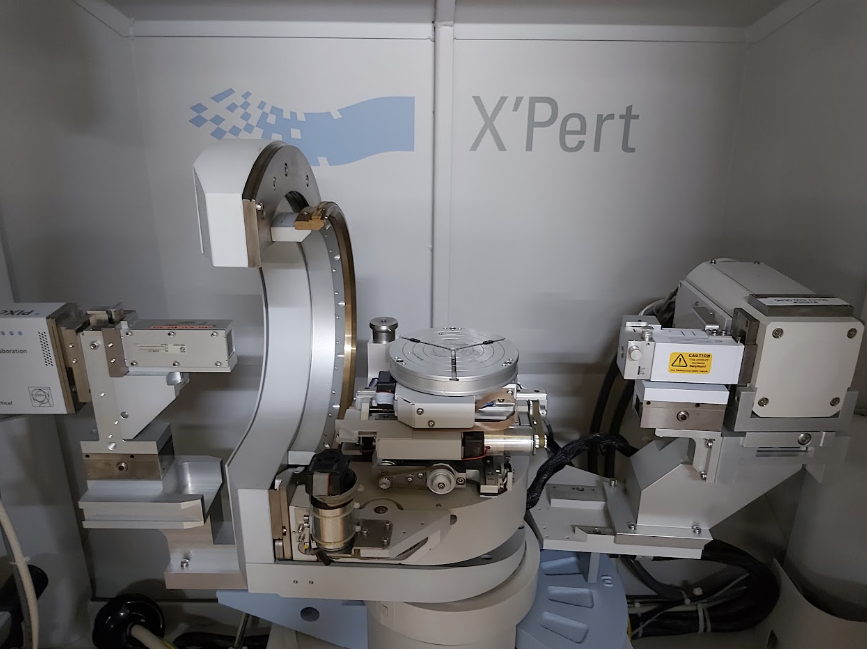
X-ray diffractometer (XRD) in the laboratory

03

X-ray Diffractometer (XRD)

Purpose

Characterizes crystal structures, phase composition, and the crystallinity of thin-film materials.

Principle

A periodic crystal lattice produces Bragg diffraction of X-rays, and the angles and intensities of the diffraction peaks reveal crystal structures and phase composition.

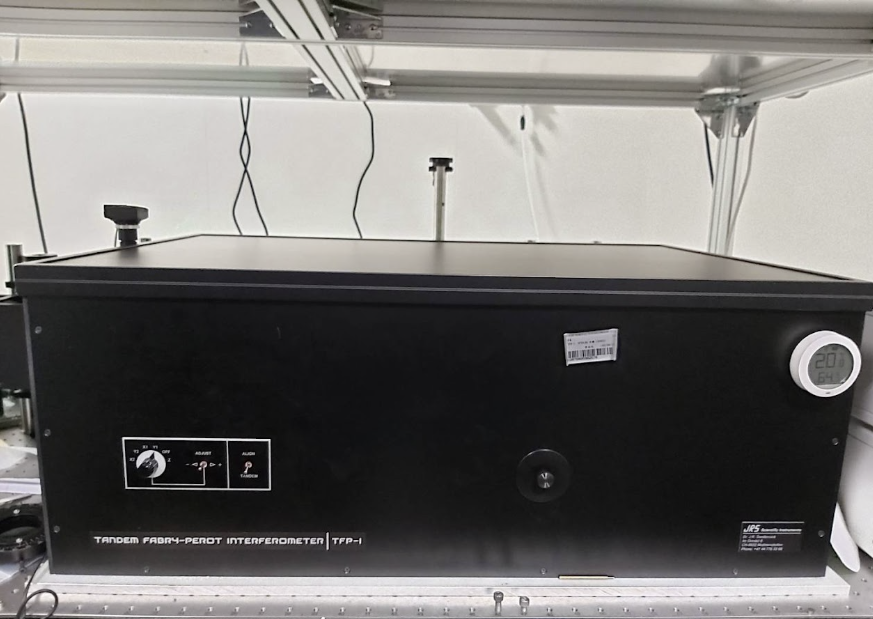
Brillouin light scattering system (BLS) in the laboratory

04

Brillouin Light Scattering System (BLS)

Purpose

Characterizes spin waves and magnetization dynamics in materials.

Principle

Laser photons scatter inelastically from magnons in the material, and the frequency shift of the scattered light is used to analyze spin waves.

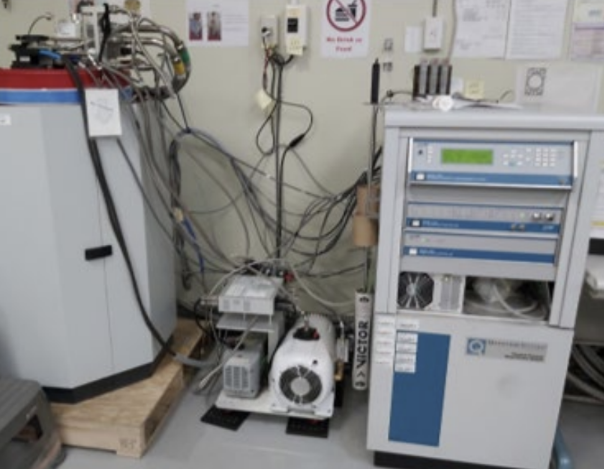
Physical Property Measurement System equipment in the laboratory

05

Physical Property Measurement System (PPMS)

Purpose

Provides controlled temperature and applied magnetic field environments for electrical-transport measurements of thin films and quantum materials.

Principle

The voltage and current response of a sample is measured under controlled temperature and magnetic field to obtain resistance and other electrical-transport properties.

Superconducting Quantum Interference Device magnetometer equipment in the laboratory

06

Superconducting Quantum Interference Device (SQUID) Magnetometer

Purpose

Measures magnetization with high sensitivity to reveal how material magnetism varies with temperature and applied magnetic field.

Principle

Quantum interference produced by Josephson junctions and magnetic-flux quantization converts extremely small changes in magnetic flux into a measurable signal.

Recent Publications

Recent publications

Selected recent peer-reviewed publications spanning low-dimensional magnetism, topological transport, interfacial magnetism, and ferroelectricity.

2026

Physical Review B · 113, 184442

Proximity-induced ferrimagneticlike interfaces in the topological-insulator heterostructures Cr₂Ge₂Te₆/(Bi,Sb)₂Te₃/Eu₃Fe₅O₁₂

Oppositely signed anomalous Hall responses from the two magnetic-insulator interfaces show how interfacial magnetism and Berry curvature can be engineered in a topological-insulator stack.

DOI ↗

Physical Review Research · 8, 013215

Tunable band-filling effects on thermoelectric properties and anomalous Hall conductivity in Weyl semimetal Co₃Sn₂S₂

Fe and Ni substitution tune band filling, thermoelectric response, and anomalous Hall transport through distinct intrinsic and scattering mechanisms.

DOI ↗

Nature Materials · 25, 1361–1369

Six-state clock physics in an atomically thin antiferromagnet

Monolayer NiPS₃ exhibits behavior consistent with a two-dimensional BKT state and, upon further cooling, develops long-range order consistent with the six-state clock model.

DOI ↗

Nano Letters · 26, 864–870

Spatially Tunable Interfacial Ferroelectricity in Low-Symmetric WTe₂

The odd–even layer parity of WTe₂ enables spatial control of interfacial ferroelectricity. Interlayer sliding switches the dipole polarization, and the transition temperature exceeds 550 K.

DOI ↗

Earlier Highlights

Earlier research highlights

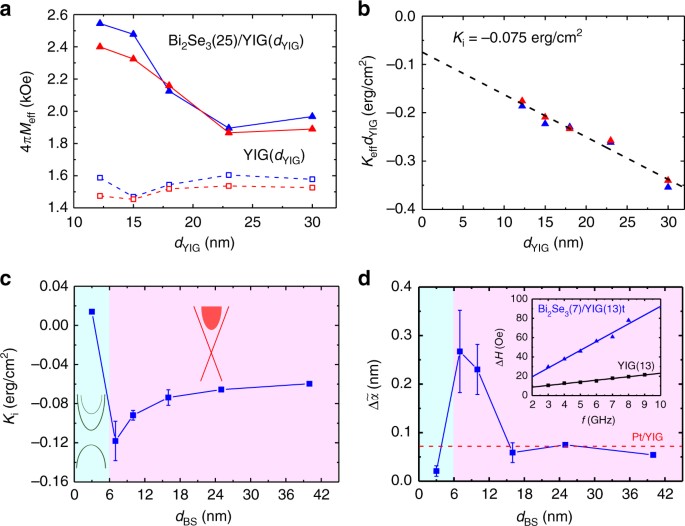
Four experimental plots showing how Bi₂Se₃ and YIG thickness affect interfacial magnetic anisotropy and damping
Figure 2; panels (c) and (d) show how Bi₂Se₃ thickness affects interfacial magnetic anisotropy and damping. Source: Fanchiang et al., Nature Communications (2018), CC BY 4.0.

2018 · Nature Communications

Strongly exchange-coupled and surface-state-modulated magnetization dynamics in Bi₂Se₃/yttrium iron garnet heterostructures

Ferromagnetic resonance reveals strong interface coupling and a magnetic proximity effect influenced by topological surface states.

DOI ↗
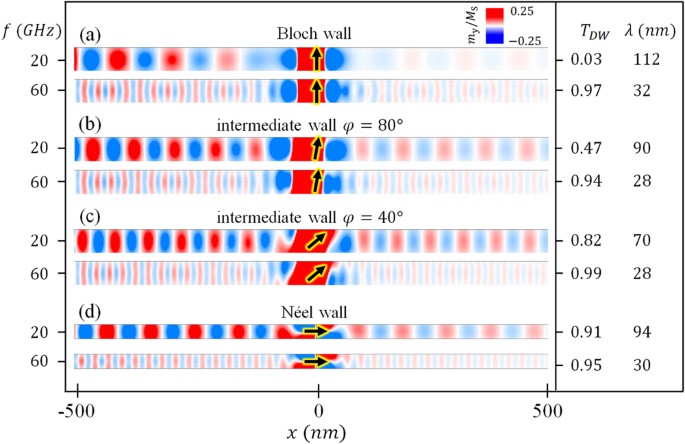
Simulated magnetization maps of 20 and 60 GHz spin waves passing through different domain walls
Figure 2; panel (a) contrasts the transmission of 20 and 60 GHz spin waves through a Bloch wall. Source: Chang et al., Scientific Reports (2018), CC BY 4.0.

2018 · Scientific Reports

Ferromagnetic domain walls as spin wave filters and the interplay between domain walls and spin waves

Micromagnetic simulations connect domain-wall orientation, spin-wave transmission, and domain-wall motion.

DOI ↗

Members

Laboratory members

We connect materials, measurement, and computation to explore key questions in spintronics and quantum materials.

Current member

Former members

Tsun-Chun Chang

Yen-Fu Liu

Ming-Yi Kao

Dan-Ru Qu

Bo-Chien Huang

Xiao-Shen Pan

Zheng-Qi Zhang

Ren-Hao Jhang

Shivani

Shweta

Join the Lab

Join the Spintronics Laboratory

We welcome people interested in spintronics, low-dimensional magnetism, and quantum materials. Whether you are beginning with a research project or pursuing advanced degree and professional research, we invite you to get in touch.

Who can join

  • Undergraduate students Research projects, summer internships, and research experience
  • Master’s and doctoral students Degree research and experimental training
  • Postdoctoral fellows Independent research and interdisciplinary collaboration
  • Full-time research assistants Experiments, data analysis, and research-project support
  • Research collaborators Joint research, technical exchange, and academic collaboration

Current research directions

Low-dimensional magnetism and van der Waals quantum materials

We explore ferromagnetism, antiferromagnetism, and multiferroicity in atomically thin materials, including magnetic order, phase transitions, exciton–spin interactions, and magnetoelectric coupling.

Spin transport and magnetization dynamics

We study how spin currents are generated, transported, detected, and controlled through spin Hall effects, spin–orbit torque, spin pumping, spin Seebeck effects, spin waves, and domain-wall dynamics.

Magnetic heterostructures and interface physics

We prepare magnetic thin films and heterostructures to investigate magnetic proximity effects, interfacial anisotropy, Dzyaloshinskii–Moriya interaction, and charge–spin coupling.

Topological magnetism and magnetotransport

We investigate anomalous and topological Hall effects, Berry curvature, Weyl semimetals, and topological spin structures in magnetic and topological materials.
Research Training and Resources

Members can participate across the research workflow, from thin-film preparation and structural characterization to low-temperature magnetic and electrical measurements using facilities such as XRD, PPMS, and SQUID, alongside data analysis, simulation, and international collaboration.

If these directions interest you, email us with a brief introduction, your research interests, and your CV.

Contact us