2026/12/22(Tue) 14:00 -16:00 一樓演講廳 1F, Auditorium
Title
Nuclear structure as a bridge between QCD and quantum many-body physics
Speaker
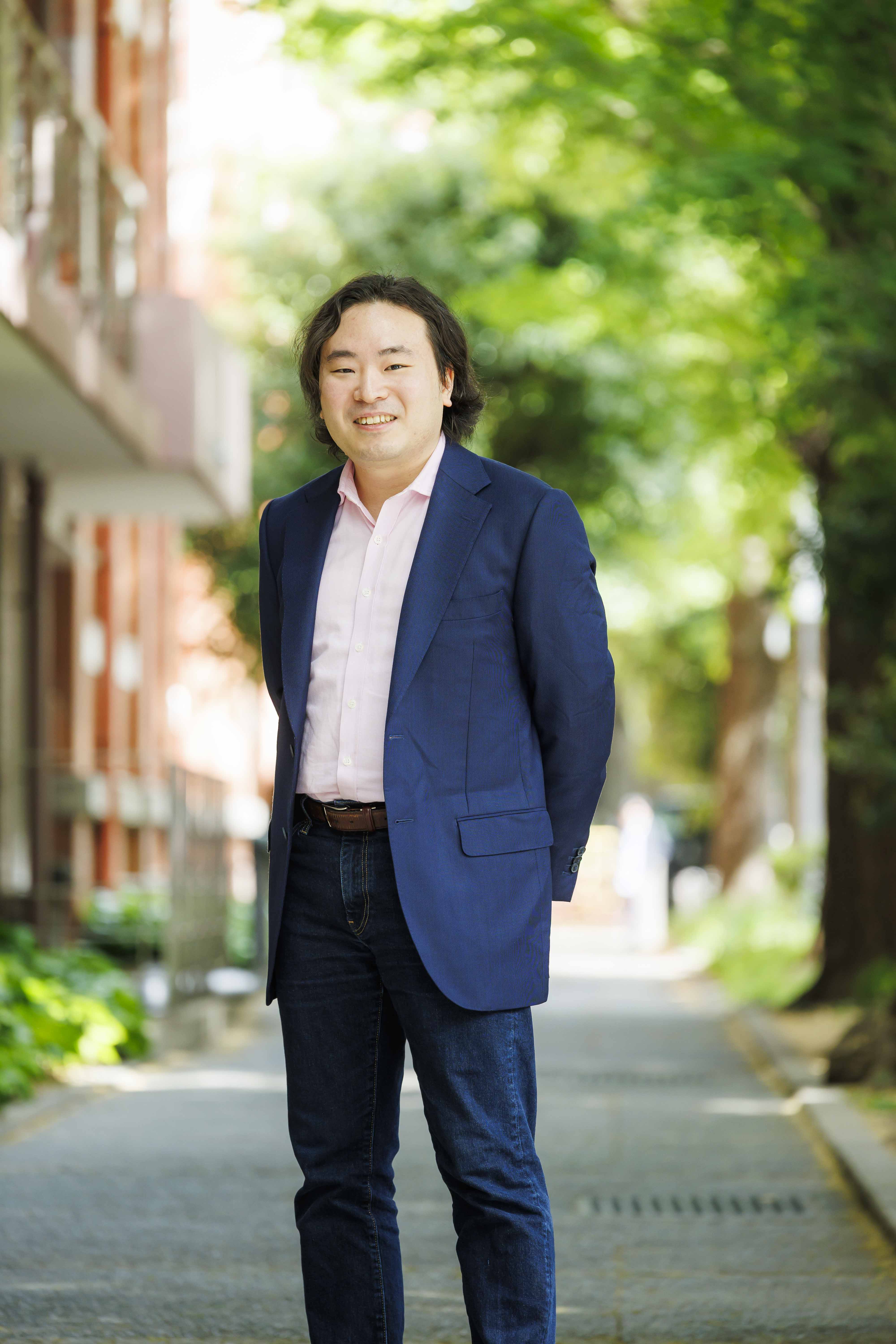
內藤智也助理教授 (日本東京大學) Assistant Prof. Tomoya Naito (University of Tokyo)Abstract
Atomic nuclei are quantum many-body systems of protons and neutrons (nucleons). Understanding these systems provides crucial insights into a wide range of fields. In particle physics, superallowed beta decays of nuclei stringently test the unitarity of the Cabibbo-Kobayashi-Maskawa matrix of the Standard Model. In astrophysics, nuclear properties and the equation of state are essential inputs for understanding nucleosynthesis and neutron stars. In condensed matter physics, density functional theory (DFT), also widely used in nuclear physics, is a standard tool for electronic systems.
However, unlike electrons, nucleons are composite particles made of quarks and gluons; their interaction originates from quantum chromodynamics (QCD), which cannot be solved exactly at low energies, and their properties can change inside nuclei. DFT is a key framework for such systems: It encodes complicated many-body correlations into an energy density functional (EDF) of nucleon densities and describes nuclei across the nuclear chart. Yet, deriving the EDF from QCD remains an open question.
In this colloquium, I will discuss how the changes in hadron properties inside nuclei can be incorporated into nuclear DFT to bridge QCD and nuclear structure. As an example, I will focus on isospin symmetry breaking, a small proton-neutron asymmetry originating from the up-down quark mass difference and electromagnetism. I will show that its change inside nuclei can resolve a half-century-old puzzle known as the Okamoto-Nolen-Schiffer anomaly. Finally, I will present my research program towards QCD-informed nuclear EDFs and its implications for particle physics and astrophysics.
Language
演講語言 (Language): in English