


Polymer-Based Prism-Free Nanograting SPR Imaging Enables Multiplexed Detection and Single-Step Aptamer Binding Kinetics
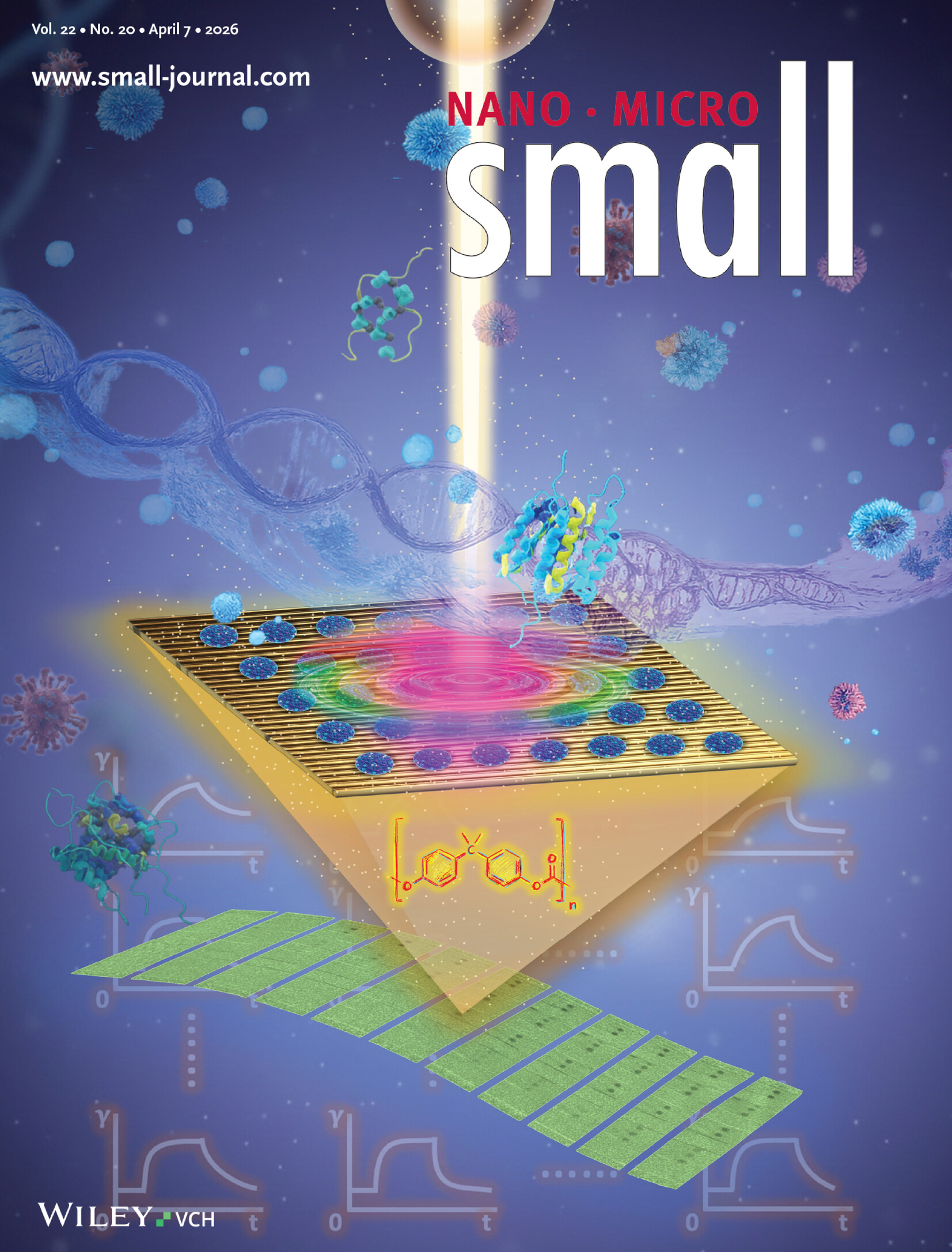
Dr. Chia-Fu Chou’s team (Drs. Deng-Kai Yang and Jui-Hong Weng, TIGP-Nano PhD candidates Tzu-Tsai Chu and Liang-Kun Yu, Institute of Physics, Academia Sinica)—in collaboration with Director Pei-Kuen Wei, Dr. Shu-Cheng Lo, and Mr. Yi-De He (Research Center for Applied Sciences, Academia Sinica), Dr. Kuang-Li Lee (Department of Electrical Engineering, National Chi Nan University), as well as Drs. Pierre-François Calmon and Thierry Leïchlé (LAAS-CNRS & Université de Toulouse, France), developed a prism-free, low-cost and high-throughput polymer-based nanograting surface plasmon resonance imaging (SPRi) chip and its corresponding spotting and detection platforms.
Key innovations of the platform include:
1. Precise microarray spotting system: The team developed a custom-built microarray spotting system by integrating an optical microscope with a 3D-printed polymer spotting pin, allowing accurate deposition of samples onto gold nanograting surfaces. Spot diameters are 50–60 µm, with 70 µm spacing, achieving high-density spotting of up to 196 spots per mm² without signal overlap.
2. Prism-free high-throughput SPR imaging: Using normal-incidence illumination, the system eliminates the need for conventional prisms, greatly reducing complexity and cost, while enabling chip-based multiplexed biosensing. The system exhibits a linear refractive index response from 1.3335 to 1.3407, suitable for kinetic studies.
3. Multi-channel microfluidic analysis: A custom five-channel microfluidic module allows simultaneous analysis of multiple sample concentrations in a single step. The system successfully monitored thrombin–DNA aptamer interactions in real time and determined kinetic parameters in single-step.
4. Future applications: The platform can be extended to antibody–antigen and protein–protein interaction analysis, and integrated with micro/nanofluidics to enhance detection speed and sensitivity, offering a powerful tool for aptamer and antibody screening.
This innovative technology provides a low-cost, high-precision, and scalable SPR detection platform, with potential applications in biomolecular screening, drug development, and clinical research. The study has been published in the international journal Small and selected as the Back Cover of the April 7, 2026 issue.
Journal Links: https://onlinelibrary.wiley.com/doi/10.1002/smll.202512092
(Back Cover: https://doi.org/10.1002/smll.73072)
Journal Links: https://onlinelibrary.wiley.com/doi/10.1002/smll.202512092
WebSite: https://doi.org/10.1002/smll.73072